Script

Only with your donations am I able to continue this blog. Please
consider donating.
Showing posts with label rape. Show all posts

Tuesday, March 6, 2012

Eight Women Allege Rape, Assault in Military Suit


By Ian Simpson

United States - Eight current and former U.S. service members alleged in a lawsuit filed on Tuesday they were raped, assaulted or sexually harassed while in the military and were retaliated against when they complained.
The lawsuit filed in U.S. District Court in Washington accuses military leaders of having a "high tolerance for sexual predators in their ranks, and 'zero tolerance' for those who report rape, sexual assault and harassment."
The eight women include a Marine on active duty and seven veterans of the Marine Corps and Navy. Seven allege that a fellow service member raped or tried to sexually assault them, and an eighth said she was harassed while deployed outside the United States.

The suit says the Pentagon has failed to take enough steps to deal with the problem despite avowals to do so.
Defendants include Defense Secretary Leon Panetta, Marine Corps Commandant General James Amos, Secretary of the Navy Ray Mabus, and former Defense and Navy secretaries and Marine commandants.

"Men and women should not have to check their constitutional rights at the door. No one should have to submit to being raped to be able to serve," Susan Burke, the women's attorney, told Reuters on the margins of a news conference.

Cynthia Smith, a Pentagon spokeswoman, said in a statement that it would be inappropriate to comment on pending litigation but that sexual assault had no place in the Defense Department.

Under a policy announced in December, service members who report a sexual assault can quickly transfer from their unit or base, she said.

The Defense Department has boosted funding for investigators and judges to get training in sexual assault cases and is putting together a database to track cases, Smith said.

"One sexual assault is one too many," she said.

Friday, March 2, 2012

Argentine Women Refused Legal Abortions in Cases of Rape

By Marcela Valente

Buenos Aires - For over 90 years, a law in Argentina has allowed women who become pregnant as a result of rape to have an abortion. However, hospitals often refuse to carry out the procedure, instead referring the women to the justice system.

Argentine law penalises doctors who carry out abortions and the women who have them, with certain exceptions.

The 1921 criminal code states that abortion is not punishable when a doctor performs it because the life or health of the mother is in danger, or "if the pregnancy is the result of rape or sexual assault of a feeble-minded or demented woman."

Nevertheless, cases periodically crop up where sexually abused or raped girls, teenagers and women are referred to the justice authorities for a decision about a procedure that in fact does not require authorisation.

"Abortion is a medical procedure. Doctors, not judges, should decide whether it needs to be done," Natalia Gherardi, a lawyer and head of the Latin American Group for Gender and Justice (ELA), told IPS.

In spite of the legal ban, between 460,000 and 600,000 abortions a year are performed in this country, according to NGOs, and an estimated 100 women die every year from clandestine abortions performed in unsanitary conditions.

Aware of the difficulties in obtaining approval of a law legalising abortion, women's organisations have long campaigned for at least an effective right to abortion in cases in which it is already legal.

Gherardi said "there is great uncertainty among doctors on how to interpret the article" in the law that establishes which cases of abortion are not punishable. And their confusion is understandable, given what happens when cases are referred to the justice system.

Some judges authorise the abortion; others rule that authorisation is unnecessary; and some judges rule, against the law, to prevent the procedure.

To avoid the referral of these cases to the justice authorities, in 2007 the Health Ministry issued a Technical Guide for the Comprehensive Care of Non-Punishable Abortions.

The guide book acknowledges that "for many decades" women have been prevented from exercising their right, enshrined in the criminal code, "to have access to an abortion in authorised circumstances."

"The state is obliged to guarantee the exercise of that right," says the guide, which adds that hospitals "have the legal obligation to carry out the procedure, and are not required to call for judicial intervention and/or authorisation" before acting, even in cases of under-age girls.

Nevertheless, there are regular instances of girls attending a hospital with their parents and being denied an abortion. The most recent case to have come to light occurred in January, in the province of Entre Ríos, where an 11-year-old girl who had been sexually abused became pregnant.

Doctors at the public hospital insisted on judicial authorisation, and a judge refused permission for the procedure. Furthermore, the provincial health minister, Hugo Cettour, publicly said that if the girl was capable of conceiving, she was capable of being a mother.

In the face of this pressure, and even more pressure from both the Catholic and evangelical churches, families give up the right to legal abortions. "This almost always happens to women who are poor or marginalised," Gabriela Filoni, a lawyer, told IPS.

Filoni is in charge of the regional litigation programme of the Latin American and Caribbean Committee for the Defence of Women's Rights (CLADEM), which in conjunction with other organisations succeeded in taking one of these cases to the international arena.

As a result of their intervention, in 2011 the United Nations Human Rights Committee ordered the Argentine state to provide "reparations, including an indemnity" to a mentally disabled young woman who was denied an abortion.

"The time period allowed for the state to respond has expired. We know the government asked for an extension, but what we want is a public policy or a legal measure that would prevent a repeat of these cases," said Filoni.

The 2006 case involved a 20-year-old woman identified in the records as LMR, in Guernica in the province of Buenos Aires, who has a mental age of between eight and 10 as certified by her physicians. The young woman was raped by her uncle, and became pregnant. But when her mother took her to the hospital for an abortion, the doctors refused and sent her to another facility.

At the second hospital, the bioethics committee met and referred the case to the justice system. A court denied permission for the abortion, and the ruling was upheld on appeal.

The provincial Supreme Court finally recognised the young woman’s right to a legal abortion. Furthermore, the court stated that judicial authorisation should not have been required in the first place.

But even then, the hospital refused to carry out the procedure, claiming this time that the pregnancy was too advanced. In the end, the family had to arrange an illegal abortion to terminate a 20-week pregnancy.

By this time, LMR's mother and sister had both lost their jobs because they stayed by her side throughout the whole process, and they had been harassed by Catholic groups applying pressure to prevent the abortion.

"Authorisation was not necessary in this case, yet the health providers washed their hands of the matter, and the problem here is that referring the case to the justice system takes time, and the pregnancy continues to advance," said Filoni.

In a survey carried out by Ibarómetro, a polling firm, seven out of 10 respondents asked about the case of the 11-year-old girl in Entre Ríos said she should have been given a legal abortion.

When asked about the legalisation of abortion, 60 percent of respondents said it should be a woman's right, and access should be guaranteed by the state.

Friday, January 6, 2012

Rape Definition Expanded By Government


Washington D.C. - The government has at long-last expanded the definition for rape to include victims and attackers of any gender, including woman-on-man and man-on-man. It also expands the meaning to cover when the victim is incapable of giving consent due to the influence of drugs, alcohol, or age.

Supporters say the expansion of the definition is one that's long overdue because lawmakers and authorities use crime statistics to determine where resources and money for victims.

Senior White House adviser Valerie Jarrett called the change a "very, very important step because it counts men and because it includes rapes outside of physical force.

Thursday, December 29, 2011

South Dakota Bar Owner Charged with Raping Three Girls


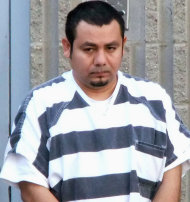
Huron, South Dakota- 34 year old bar owner Werner Fajardo was arrested for raping 3 girls at his El Cuervo bar on an early Saturday morning. The girls, two of which are 14 and the third 12, were supposed to be babysitting when they met up with Fajardo who drove them to his closed tavern and began pouring up drinks ranging from vodka shots to mixed drinks involving vodka and orange juice, cola, and energy drinks. After several rounds of drinks two of the girls felt sick and all three exclaimed that they either passed out or went to sleep.

According to prosecutors, this was when Fajardo raped them. Fajardo was charged with six counts of rape and three counts of serving alcohol to a minor to which he posted a $10,000.00 bond on. Approximately a week later, police authorities conducted their first alcohol compliance check to which 11 minors were found within the bar. Due to the discovery, Fajardo was once again arrested for five counts of furnishing alcohol to a minor and allowing people under age 21 on the premises to which a $150,000.00 bond was set. "Obviously we were missing some things. Whether or not it could have been caught with compliance checks at El Cuervo, we'll never know," stated Beadle County's state's attorney, Michael R. Moore.

El Cuervo, the only business licensed as a "dance-hall" in Huron, was known for weekly signs advertising a "teen night". It was at these teen nights that Fajardo met his victims, says Moore. Upon mentioning the alleged rape to their parents, and the parents to the Huron Police Department (HPD), several other victims arose with similar stories as to how they were coerced into drinking until they passed out and shortly thereafter recalled different sexually inappropriate acts from Fajardo. None of the victims were aware of each other's particular story, only the allegations.

"I questioned how they were able to have teen night in a bar. We saw teenagers go in and out," said Sheila Moore, manager of Homecare Services, an independent living establishment next door to El Cuervo.
Fajardo's bar had been exploiting an expired ordinance that allowed 18 to 21 year old's to congregate at the bar as long as it was designated as a dance hall. After applying in June 2010 for the dance hall license, the city permitted, and the effects took place two months thereafter. Not long following, Huron City repealed the license, yet Fajardo still welcomed minors.

Huron City Police stated that prior to Fajardo's charges and investigation, they had never suspected any illegal acts taking place within the bar and have since began to increase police presence at other local bars. "Obviously we were missing some things. Whether or not it could have been caught with compliance checks at El Cuervo, we'll never know," said Sgt. Brandon Neitzert, spokesman for the HPD.

Fajardo has not publicly discussed his cases, but plead not guilty to all charges and requested both cases be jury trials during his arraignment on Dec. 20. The Sioux Falls resident has been charged with first-degree and third-degree rape in his alleged attack on the 12 year old and several counts of third-degree rape and fourth-degree rape for each of his alleged attacks on the 14 year old's. Fajardo also faces a "sexual contact with a person incapable of consenting and exploitation of a minor" for alleged attacks in Sept. of 2011. His trial consisting of six rape chages, several sexual assault charges, and furnishing alcohol to minors is set for March 28 wheras he'll be tried on a beverage law violation on Feb. 23. If convicted on the more serious charges, Fajardo faces life imprisonment. All attempts made to contact Fajardo's attorney have come up dead ends.